- Systematic Reviews
- 4 min read
- By George Burchell
- View publications on PubMed
- ORCID
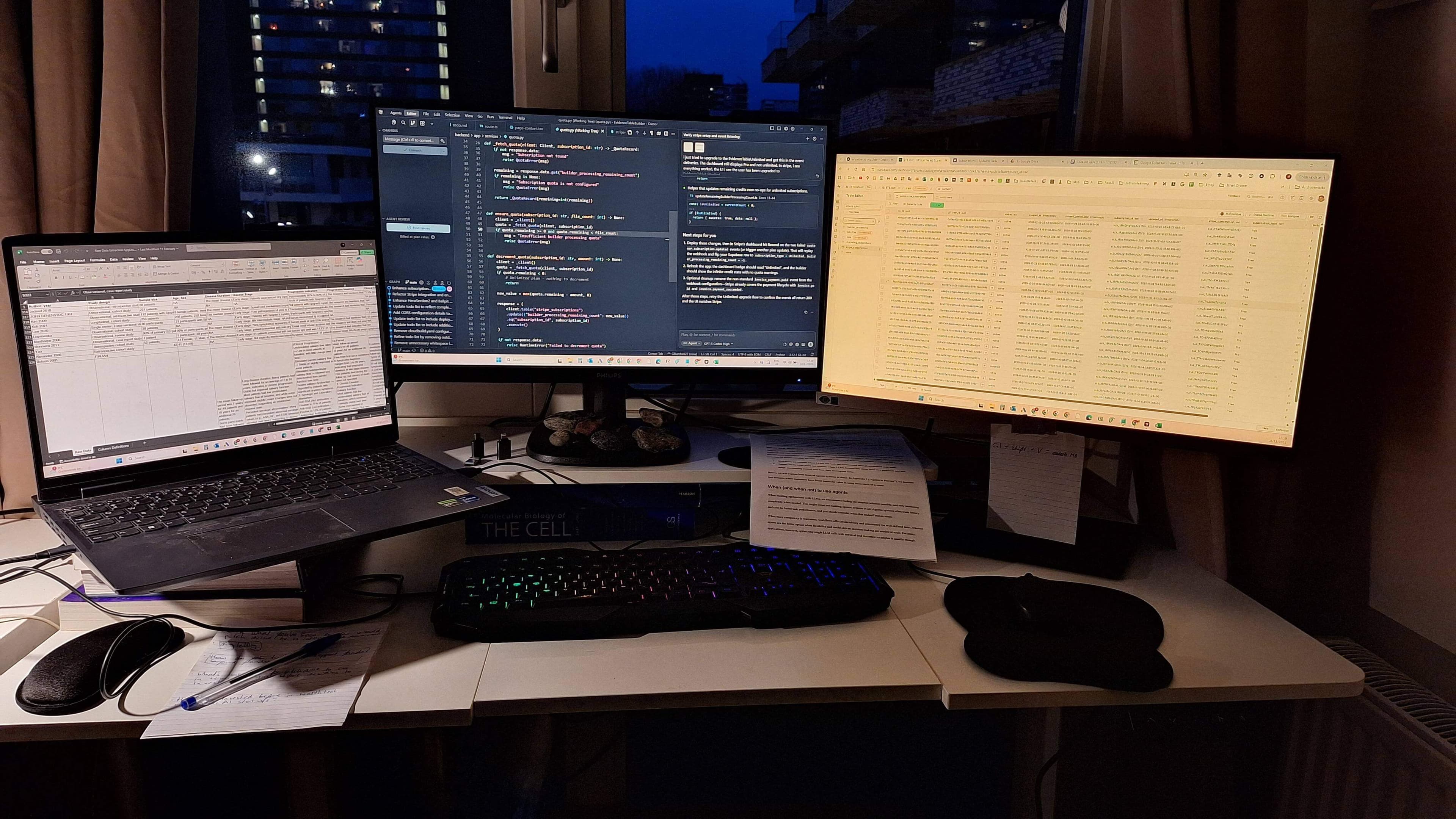
When I Realised Systematic Reviews Are Really About Managing Chaos
When I Realised Systematic Reviews Are Really About Managing Chaos
Most people assume systematic reviews are all about reading papers. That’s what I thought too, back when I was working as an information specialist at the UMC hospital, Amsterdam.
But it wasn’t until I stepped into my first freelance consultancy role that I realised what systematic reviews are really about: managing chaos.
The Moment It Clicked
As an information specialist, my focus was usually on the search strategy, building queries, running them across databases, and handing over the results. But in my first consultancy role with a big pharma company, the scope expanded.
Suddenly, I was responsible for almost every part of the review except the statistics and the final manuscript. I had to make sure the protocol was sound, design the research questions, run and document the searches, merge results from multiple databases, remove duplicates, tag for traceability, screen the records, and extract and clean the data so it was ready for analysis.
The topic was Sjögren’s syndrome, a rare autoimmune disease. I thought that meant it would be straightforward; fewer papers, less complexity. I was wrong.
What I encountered was a mess of inconsistent terminology, missing data, conflicting study designs, and team members interpreting inclusion criteria in slightly different ways.
That was the turning point. I realised that systematic reviews aren’t about reading. They’re about building systems that make sense of disorder. If you still hear the "big literature review" myth, The Biggest Myth About Systematic Reviews explains why that framing fails.
The Hidden Architecture of a Review
When you look at a published review, everything seems neat and linear: clean tables, tidy PRISMA diagrams, and a well-structured discussion.
But behind that polished surface is an entire world of complexity, and if you don’t manage it carefully, it quickly becomes unmanageable.
Every review involves:
- Dozens of search strategies across multiple databases
- Duplicates that never quite disappear no matter how carefully you de-dupe
- Shifting inclusion criteria that need version control
- Data extraction templates that have to evolve as you go
- Email trails to clarify missing information
- Hundreds of micro-decisions that all have to be documented
It requires constantly balancing between precision and pragmatism.
If you don’t design for that complexity, it designs you.
Learning to Design Systems, Not Just Follow Them
That early experience was a crash course in project management, information architecture, and patience. It taught me that “systematic” doesn’t mean tidy, it means deliberate.
A good review isn’t just about rigour; it’s about resilience. You need systems that make transparency, reproducibility, and collaboration possible even when the data (and the team) are messy. For a practical walkthrough of a structured pipeline in action, see How a Clear Systematic Review Workflow Transformed an Overwhelmed MSc Student Project.
Once I started viewing systematic literature reviews as systems, not tasks, everything changed. I began to see where automation could help, where human judgement really mattered, and how to make processes both faster and more reliable without cutting corners. If you are exploring where automation helps without cutting corners, Automating Literature Searches is a good starting point.
That shift in mindset, from “doing reviews” to “designing workflows”, has shaped everything I’ve done since.
Why I Started Building Tools
That lesson naturally led me to start creating tools to handle the chaos.
The repetitive admin, the version tracking, the endless spreadsheet wrestling, all of it can be simplified with the right structure and a bit of automation.
But I’m not interested in replacing people with AI. What I care about is using technology to give researchers more time to think. The aim is simple: let machines do what they’re good at (sorting, tagging, formatting), so humans can focus on what really matters (interpreting, reasoning, and drawing insight).
That’s why I’ve built tools designed to reduce friction across the process, from search blocks to screening to data extraction. They’re not a replacement for expertise. They’re a way to preserve it.
From Chaos to Clarity
If there’s one thing I’ve learned, it’s that the heart of systematic reviewing isn’t the literature, it’s the structure.
Anyone can read papers. The real challenge is turning hundreds of tiny, messy details into something coherent, transparent, and repeatable.
That first chaotic project taught me to stop fighting complexity and start designing for it.
And that’s what I’ve been doing ever since, helping researchers move from chaos to clarity, one system at a time.

About the Author
Connect on LinkedInGeorge Burchell
George Burchell is a specialist in systematic literature reviews and scientific evidence synthesis with significant expertise in integrating advanced AI technologies and automation tools into the research process. With over four years of consulting and practical experience, he has developed and led multiple projects focused on accelerating and refining the workflow for systematic reviews within medical and scientific research.