- Systematic Reviews
- 6 min read
- By George Burchell
- View publications on PubMed
- ORCID
The Biggest Myth About Systematic Reviews
The Biggest Myth About Systematic Reviews
If there’s one misconception I wish we could retire from research conversations, it’s “A systematic review is basically just a big literature review… with nicer formatting.”
I hear it all the time. Sometimes it’s said jokingly and also confidently. Sometimes by someone who’s been asked to run a systematic review with zero training and three days’ notice. Every time I hear it, I think if only it were that simple.
I want to break down why this myth exists, why it causes so much frustration, and what actually makes systematic reviews a totally different beast, even though, on the surface, they look similar. For a real-world example of how a clear workflow changes outcomes, see How a Clear Systematic Review Workflow Transformed an Overwhelmed MSc Student Project.
Where the Myth Comes From
I don’t blame anyone for assuming a systematic review is just a posh literature review. On paper, they look similar. Both involve reading papers, synthesising findings, and writing something coherent at the end.
But the problem is they share the same ingredients but not the same recipe.
A literature review is flexible. You can wander, explore, pick what seems most relevant. It relies a lot on judgement and experience.
A systematic review, on the other hand, is basically the opposite.
It’s not a freestyle exercise, it’s a protocol-driven, audit-ready, transparent process designed to minimise bias at every step. That’s the bit people underestimate.
The Real Difference: Transparency, Traceability, and Testability
When I tell clients that systematic reviews are closer to scientific experiments than to essays, the penny usually drops. The systematic part is a commitment to…
Documenting every decision includes documenting all the databases you searched, the terms you used, and why you included certain studies and excluded others. Even, how you resolved conflicts between reviewers. Nothing is assumed or implied; everything is explicit.
Running a process someone else could repeat. If someone followed your methods step-by-step, they should land on roughly the same evidence base you did. That’s not the case with a traditional literature review, where two people could search entirely differently and still be considered correct.
Minimising bias at each stage. Screening isn’t just picking the papers that feel most useful. Data extraction isn’t just summarising what stands out. Quality appraisal isn’t optional.
The goal is to get as close as possible to capturing all the relevant evidence, not just the most visible or convenient bits. Once you understand that, it becomes obvious why a systematic review is more than a bigger project with nicer tables.
Why This Myth Causes So Much Chaos for Researchers
Most people running systematic reviews aren’t lazy or careless, but they’re overwhelmed.
And this myth feeds that overwhelm in three ways:
1. It severely underestimates the workload
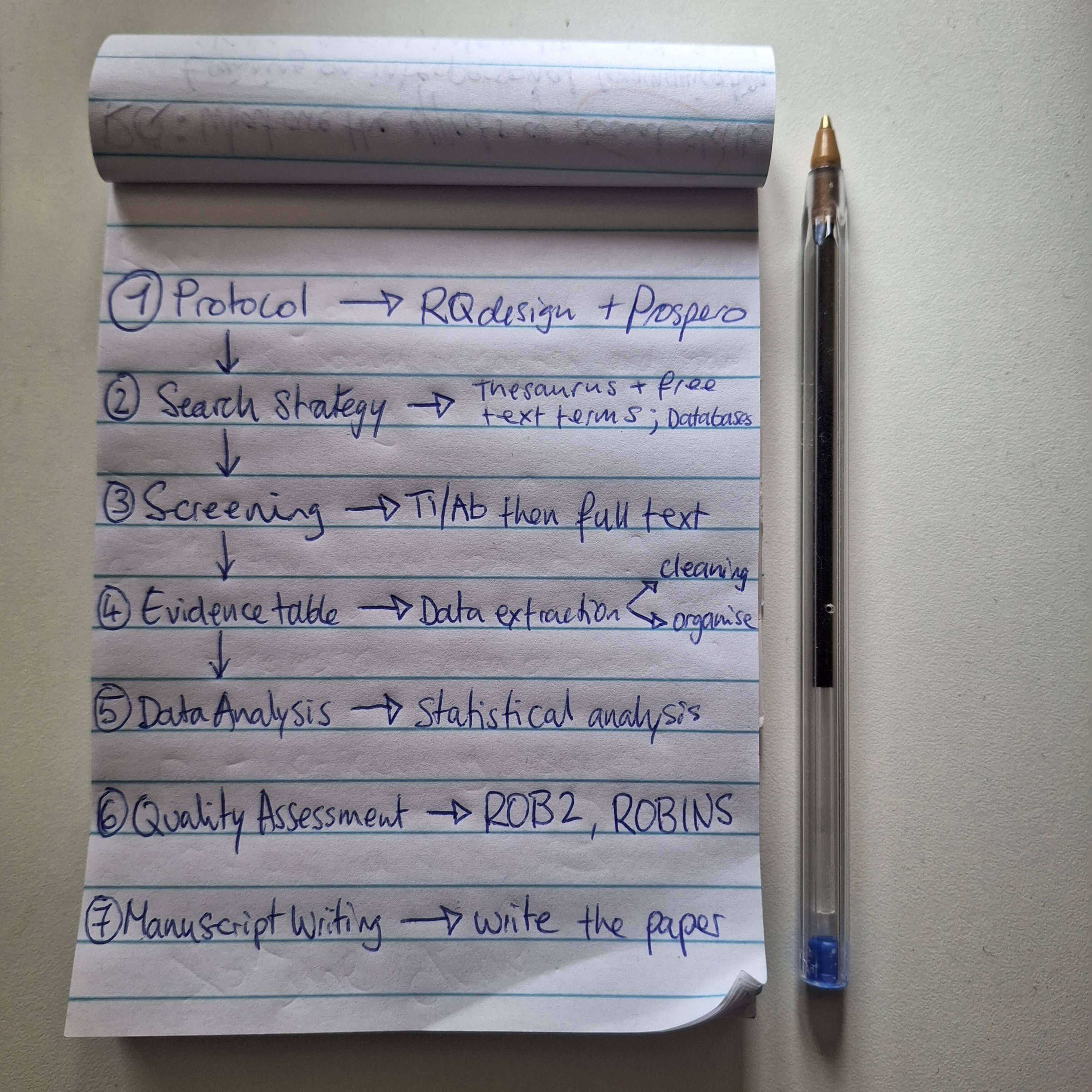
Doing a systematic review properly means juggling:
- Database searching
- Deduplication
- Screening
- Data extraction
- Evidence tables
- Critical appraisal
- Synthesis
- Writing
- Formatting
- Referencing
If you want step-by-step help with the most error-prone phases, see Screening Strategies and Data Extraction Techniques.
That’s not a weekend project! As I’ve seen with countless clients, the problem isn’t a lack of intelligence, it's a lack of structure and support.
2. It makes people feel like they’re failing at something “easy”
I see this especially with PhD students. They often think: “Everyone else seems to do these easily… Why am I drowning?”
The answer is, because they’re not easy, they’re misunderstood.
Your frustration is valid. The system sets people up to learn as they go, usually under pressure, usually with no roadmap.
3. It leads teams to cut corners without realising
Not out of bad practice, out of survival. If you think a systematic review is just a long search and a long write-up, you’ll naturally rush or skip steps. But those skipped steps are exactly where bias creeps in and results start to wobble.
So What Is the Right Way to Think About Systematic Reviews?
Here’s how I describe it to people generally, and it usually clicks…
A systematic review is a structured workflow, not a writing task. It’s a process that takes you from uncertainty to clarity. It’s designed to answer a question precisely, reliably, and transparently, so others can trust and build on your work. With the right structure (or the right tools), it becomes manageable. To be completely clear, it’s not easy or quick, but it is doable. That shift from task to system is exactly what I unpack in When I Realised Systematic Reviews Are Really About Managing Chaos.
This is exactly why I’ve built an ecosystem of tools and consultancy options, to take the chaos out of the process and help people focus on the bigger picture of their research.
Where AI Fits In (And Where It Doesn’t)
Another myth is that AI can “do the review for you”.
No. AI is not replacing human judgment in systematic reviews anytime soon. But what it can do is remove the heavy lifting such as the tedious, repetitive, admin-heavy parts that eat days or weeks.
Things like:
- Initial screening
- Deduplication
- Structuring evidence tables
- Helping you keep track of protocol steps
When you strip away the noise, humans can focus on interpretation, nuance, and context, the bits AI absolutely cannot replace. And that’s the hybrid model I use: human AND AI, each doing what they’re best at.
Why Getting This Right Matters
Systematic reviews aren’t an academic hoop to jump through. They inform clinical decisions, policy guidelines, regulatory submissions, multi-million-pound R&D choices, and patient safety.
So it’s worth doing them properly and (you guessed it) systematically.
When researchers finally see the real process, not the myth, they stop seeing systematic reviews as a burden. They start seeing them as a foundation, a way to turn scattered evidence into something dependable.
And honestly, that’s why I love this work.
Something To Think About
If you’ve ever felt stressed, lost, or overwhelmed by a systematic review, you’re honestly not bad at it. You’ve just been sold the wrong definition.
Once you understand what a systematic review really is, and once you’ve got the right structure behind you, it stops feeling like an impossible task and starts feeling like a logical, step-by-step process.
And if you ever need help navigating that process, whether it’s tools, guidance, or a full “done-for-you” review, I’m always happy to chat and point you in the right direction. Research might be complex, but it doesn’t need to be painful.

About the Author
Connect on LinkedInGeorge Burchell
George Burchell is a specialist in systematic literature reviews and scientific evidence synthesis with significant expertise in integrating advanced AI technologies and automation tools into the research process. With over four years of consulting and practical experience, he has developed and led multiple projects focused on accelerating and refining the workflow for systematic reviews within medical and scientific research.