
- Research Tips
- 7 min read
- By George Burchell
- View publications on PubMed
- ORCID
Data Extraction Techniques in Systematic Reviews
📊 Why Data Extraction Matters (and Why It's Tricky)
Data extraction is a crucial step in any systematic review. While it isn't technically difficult, it's often monotonous, repetitive, and,if you're not careful,prone to error. The biggest risks? Extracting the wrong data, missing key details, or recording information in inconsistent formats. For example, one study might report blood samples in microliters, another in milliliters, and a third in deciliters (hopefully not). Or, time might be reported in hours, minutes, or even years. If you don't standardize early, your evidence table can quickly become a mess.
💡 Pro Tip: Before you start, decide on the units and formats you'll use for each variable. Consistency is key for later analysis!
🗂️ What Types of Data Should You Extract?
There are several main groups or themes of data to consider:
1️⃣ Metadata
- Article title
- Authors
- Journal
- Year of publication
- Abstract
- Keywords
This information helps you identify and organize your articles.
2️⃣ Demographic Data
- Number of participants
- Gender breakdown (if specified)
- Age range or mean age
- Ethnicities or special populations (if mentioned)
- Participant groups (e.g., children, elderly)
Demographic data is essential for understanding trends and the generalizability of findings.
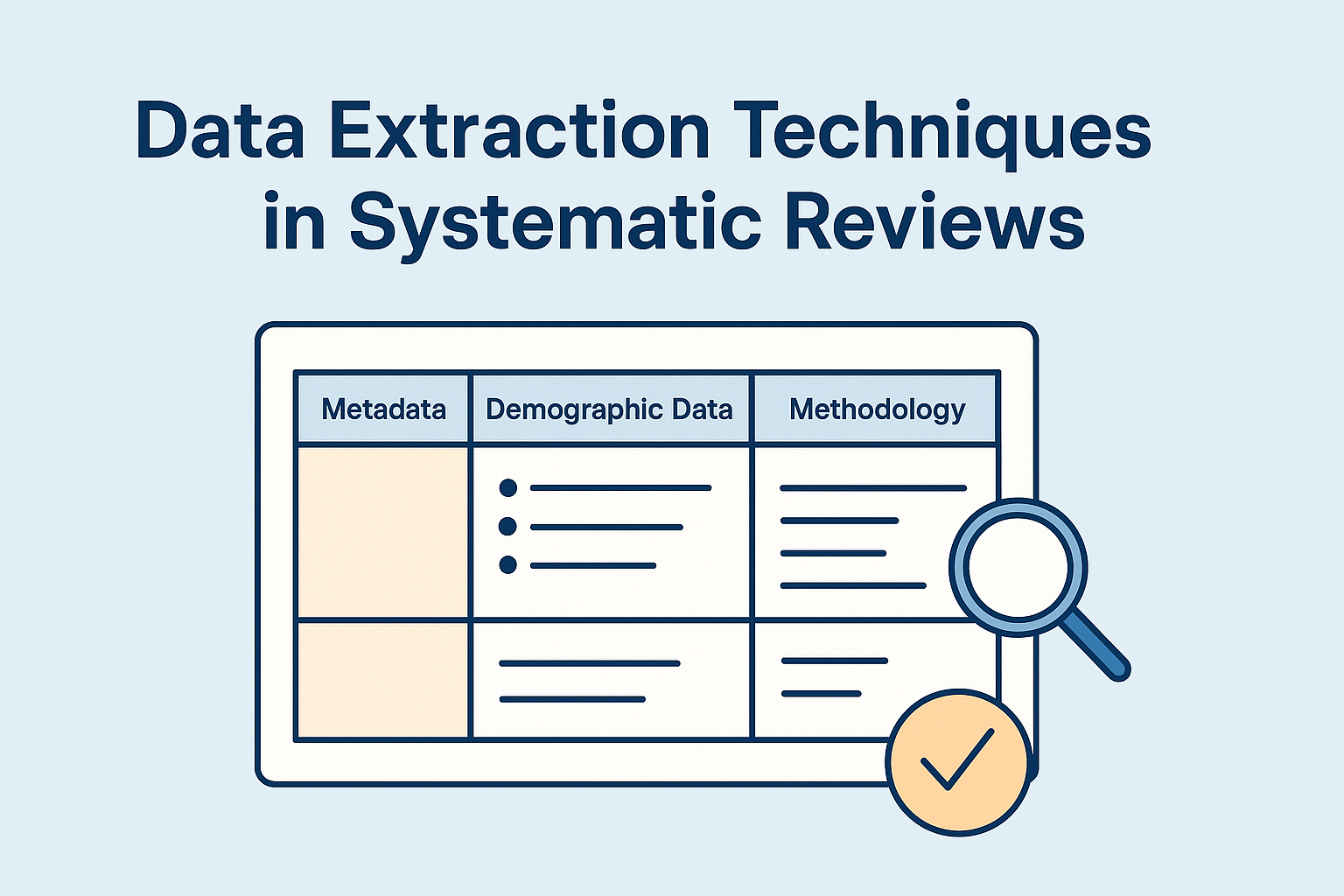
3️⃣ Methodology
- Study design (e.g., RCT, cohort, case-control)
- Methods of data collection
- How interventions or exposures were assessed
- How outcomes were measured
Extracting methodological details allows you to compare how studies were conducted and reported.
4️⃣ Results
- Main outcomes and findings
- Interventions tested
- Statistical significance
- Quantitative results (raw numbers, effect sizes, confidence intervals)
This is often the most important data for your synthesis and analysis.
📝 How to Organize Your Extracted Data
Record all extracted data in a structured table using Excel, Google Sheets, or specialized tools like EvidenceTableBuilder.com designed specifically for systematic review data extraction. These dedicated tools offer pre-built templates, validation rules, and export capabilities that make it easy to compare, contrast, and analyze studies side by side. Structure your table logically, moving from metadata to demographics, methods, and results.
💡 Pro Tip: Pilot your extraction form on a few studies first. This helps catch ambiguities and ensures you're capturing all necessary variables.
🚦 Reducing Errors and Bias
- Use standardized extraction forms - tools like EvidenceTableBuilder.com provide validated templates that ensure consistency across all studies
- Consider dual extraction (two reviewers extract data independently)
- Resolve discrepancies with a third reviewer
- Document your extraction process for transparency
🚀 Ready to Extract with Confidence?
With a clear plan, standardized formats, and a structured table, you'll turn a boring, error-prone task into a robust foundation for your systematic review. Modern tools like EvidenceTableBuilder.com take this even further by automating repetitive tasks, providing real-time validation, and generating publication-ready tables.
For a practical extraction SOP (plan, pilot, QC), see Best practices for data extraction in systematic reviews.
Ready to streamline your data extraction process?
Sign Up Now → and access our specialized tools designed to make data extraction efficient and error-free.

About the Author
Connect on LinkedInGeorge Burchell
George Burchell is a specialist in systematic literature reviews and scientific evidence synthesis with significant expertise in integrating advanced AI technologies and automation tools into the research process. With over four years of consulting and practical experience, he has developed and led multiple projects focused on accelerating and refining the workflow for systematic reviews within medical and scientific research.