- research discipline
- 5 min read
- By George Burchell
- View publications on PubMed
- ORCID
Doing Research Properly When the Outcome Is Uncertain
I recently read the Bhagavad Gita. That’s not something I ever expected to say in the context of my work, and definitely not for spiritual reasons. What caught me wasn’t the philosophy or the history. It was how practical it felt.
At its core, it’s a text about acting responsibly when the outcome isn’t fully in your control. You do the work you’re responsible for, with care and discipline, and you let go of the parts you can’t predict or force. There’s no promise that things will turn out the way you hope. Just a clear expectation that you still show up properly.
That idea stayed with me because it mirrors something I see every day in research, even if we don’t usually describe it this way.
Acting Well When You Don’t Control the Result
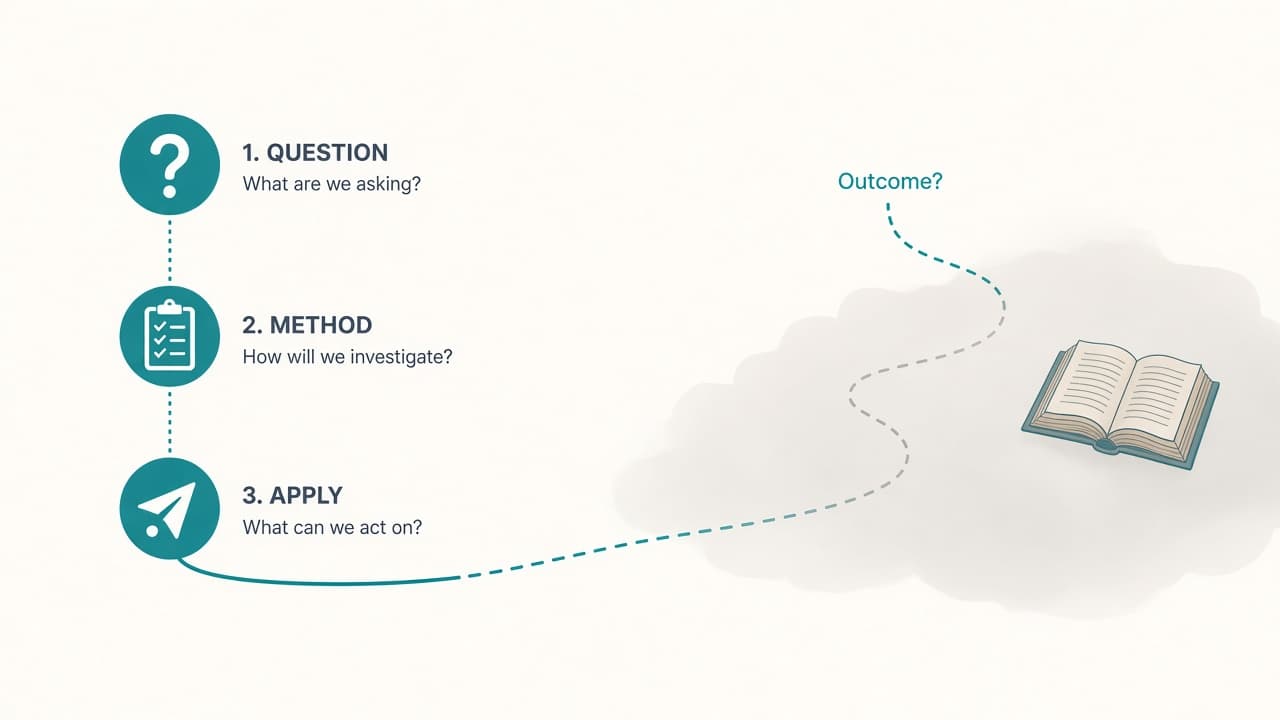
In evidence synthesis, you don’t get to choose the answer. You don’t get to decide which conclusion would be most convenient, most publishable, or most reassuring. Your responsibility lies in how carefully you define the question, how transparently you design the method, and how consistently you apply it when things get messy or slow. Once that’s done, the evidence is what it is.
That sounds obvious when written down, but in practice it’s uncomfortable. Humans are not very good at waiting. We like feedback, progress, and signs that we’re heading in the right direction. Research rarely gives you that on a neat timeline. Sometimes you do weeks of careful work only to realise the signal is weak, contradictory, or simply not what you expected.
The Gita gave me language for that discomfort. It framed rigour not as a technical standard, but as a form of discipline. You commit to doing the work properly even when the outcome is uncertain, delayed, or inconvenient.
Why Rigour Feels Emotional, Not Just Technical
One thing I’ve noticed over the years is that when research work becomes stressful, people often assume it’s because the problem is hard or they’re missing something intellectually.
More often, the strain shows up in the language people use. They apologise before explaining their reasoning, and double-check the same decision multiple times because they no longer trust the process they’re working within.
This is where rigour stops being an abstract ideal and starts becoming emotional. When the system around you is unclear, inconsistent, or fragile, the burden shifts onto the individual. You’re left carrying not just the cognitive load of the task, but the anxiety of wondering whether you’ve done it “properly”.
Good research practice, at its best, protects people from that. It gives you something solid to lean on when the work is complex and the stakes feel high. It gives you confidence in the path you took to get there.
Process as a Form of Care
Reading the Gita helped me articulate that when a process is well designed, it quietly absorbs pressure. It reduces the number of judgement calls that have to be made when you’re tired, rushed, or under scrutiny. It creates consistency without asking people to be superhumanly consistent themselves.
This matters even more when parts of the work are automated or delayed, which is increasingly the reality. When outcomes don’t appear immediately, or when they’re generated downstream from earlier decisions, the only thing you can really stand behind is the integrity of the method.
That’s why shortcuts are so tempting, and so damaging. They’re rarely taken because someone is careless or unintelligent. They’re taken because discipline is hard to maintain when the feedback loop is long and the pressure is real.
Burnout Often Starts With Losing Trust in the Method
One of the quieter signals of burnout is detachment. People stop feeling anchored to their work. They go through the motions, but without the sense that what they’re doing is grounded or defensible.
I’ve seen how quickly that can happen when someone feels responsible for outcomes they can’t fully control, without being supported by a clear, trustworthy process. Anxiety creeps in because they care a great deal and don’t feel protected by the system around them.
Detaching from outcomes, in the way the Gita describes, isn’t about lowering standards or becoming indifferent. It’s about relocating your sense of responsibility to where it actually belongs. You do your part thoroughly, and you allow the results to be what they are.
That shift alone can change how the work feels day to day. The headspace and decisions feel calmer, and the internal commentary quietens down.
What This Left Me Wondering
How do you stay committed to doing things properly when the outcome is uncertain, slow, or uncomfortable?
It’s an easy question to ask and a hard one to live with. Most modern systems, not just in research, quietly reward speed, visibility, and confidence. Discipline, patience, and restraint don’t always get noticed in the same way.
And yet, when things go wrong, it’s usually because those quieter qualities weren’t protected. This is not due to a lack of intelligence or effort, but because the conditions made it harder to act with care under uncertainty.
Sitting With the Unnamed Feeling
I suspect many people reading this recognise the feeling, even if they haven’t put words to it. That low-level tension of wanting to do things well, while knowing you can’t control how long it will take or how it will land. The mental fatigue that comes from carrying responsibility without enough structural support.
The Bhagavad Gita didn’t give me answers I can apply mechanically. What it gave me was a clearer frame for understanding why certain ways of working feel steadier than others.
Doing the work properly is about creating conditions where people can think clearly, act responsibly, and keep going without burning out. Sometimes, naming that is enough to make the work feel a little lighter.

About the Author
Connect on LinkedInGeorge Burchell
George Burchell is a specialist in systematic literature reviews and scientific evidence synthesis with significant expertise in integrating advanced AI technologies and automation tools into the research process. With over four years of consulting and practical experience, he has developed and led multiple projects focused on accelerating and refining the workflow for systematic reviews within medical and scientific research.