
- Methodology
- 6 min read
- By George Burchell
- View publications on PubMed
- ORCID
PRISMA Reporting Guidelines Explained
📋 What is PRISMA?
The PRISMA (Preferred Reporting Items for Systematic Reviews and Meta-Analyses) guidelines are the global standard for transparent, reproducible reporting of systematic reviews. Endorsed by over 200 journals, PRISMA helps clinicians, researchers, and guideline developers appraise, replicate, and update evidence syntheses efficiently.
🧩 Core Components of PRISMA 2020
1. The 27-Item Checklist
Organized into title/abstract, introduction, methods, results, discussion, and funding sections, the checklist mandates explicit reporting of:
- Eligibility criteria
- Search strategies
- Risk of bias methods
- Synthesis techniques
- Protocol registration
- Conflict of interest disclosures
Use our interactive PRISMA Checklist Tool to streamline your reporting (also available from your dashboard).
2. Flow Diagram Essentials
The PRISMA flow diagram tracks:
- Identification: Total records from databases (e.g., PubMed, EMBASE) and other sources (grey literature, hand-searching)
- Screening: Duplicates removed and title/abstract exclusions
- Eligibility: Full-text exclusions with reasons (e.g., wrong population, intervention)
- Included studies: Final count for synthesis
When you’re ready to report, generate the figure with the PRISMA Flowchart Generator. For getting identification and duplicate counts right across databases, see our guide on deduplicating multi-database search exports.
3. Search Transparency (PRISMA-S)
The PRISMA-S extension adds 16 specialized items for search reporting, including:
- Full search syntax for all databases (e.g., MeSH terms, Boolean operators)
- Search date ranges
- Contact with study authors for unpublished data
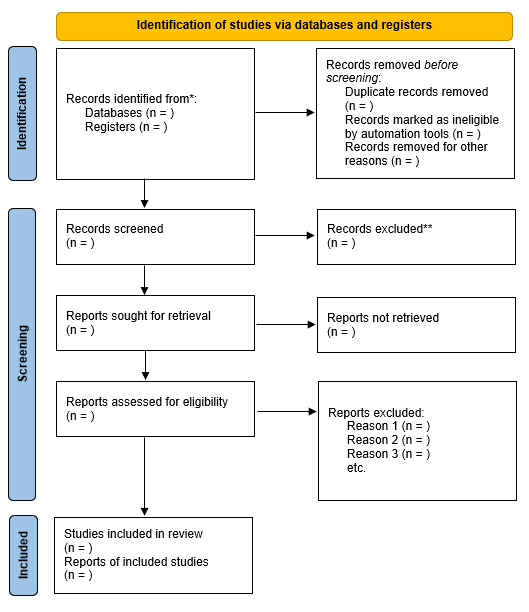
For more visual examples, see the official PRISMA flow diagram template and PRISMA checklist. Key items include "Item 8: Search methods" and "Item 16: Risk of bias assessment."
References: See BMJ n71, n160, and the PRISMA Statement.

About the Author
Connect on LinkedInGeorge Burchell
George Burchell is a specialist in systematic literature reviews and scientific evidence synthesis with significant expertise in integrating advanced AI technologies and automation tools into the research process. With over four years of consulting and practical experience, he has developed and led multiple projects focused on accelerating and refining the workflow for systematic reviews within medical and scientific research.