
- Literature Search
- 5 min read
- By George Burchell
- View publications on PubMed
- ORCID
Finding Grey Literature for Systematic Reviews
Author's Note: My advice is always that academic databases are preferred and more reliable—specifically Medline (also known as PubMed), Embase, Web of Science, and Cochrane. These stand as the best and primary sources for systematic reviews. If you wish to explore other literature sources, be warned: grey literature searching is messy, complicated, and can quickly become overwhelming. Doing a minor grey literature search is ok, but always measure whether it's worth the effort and avoid being sunk into the depths of too much information.
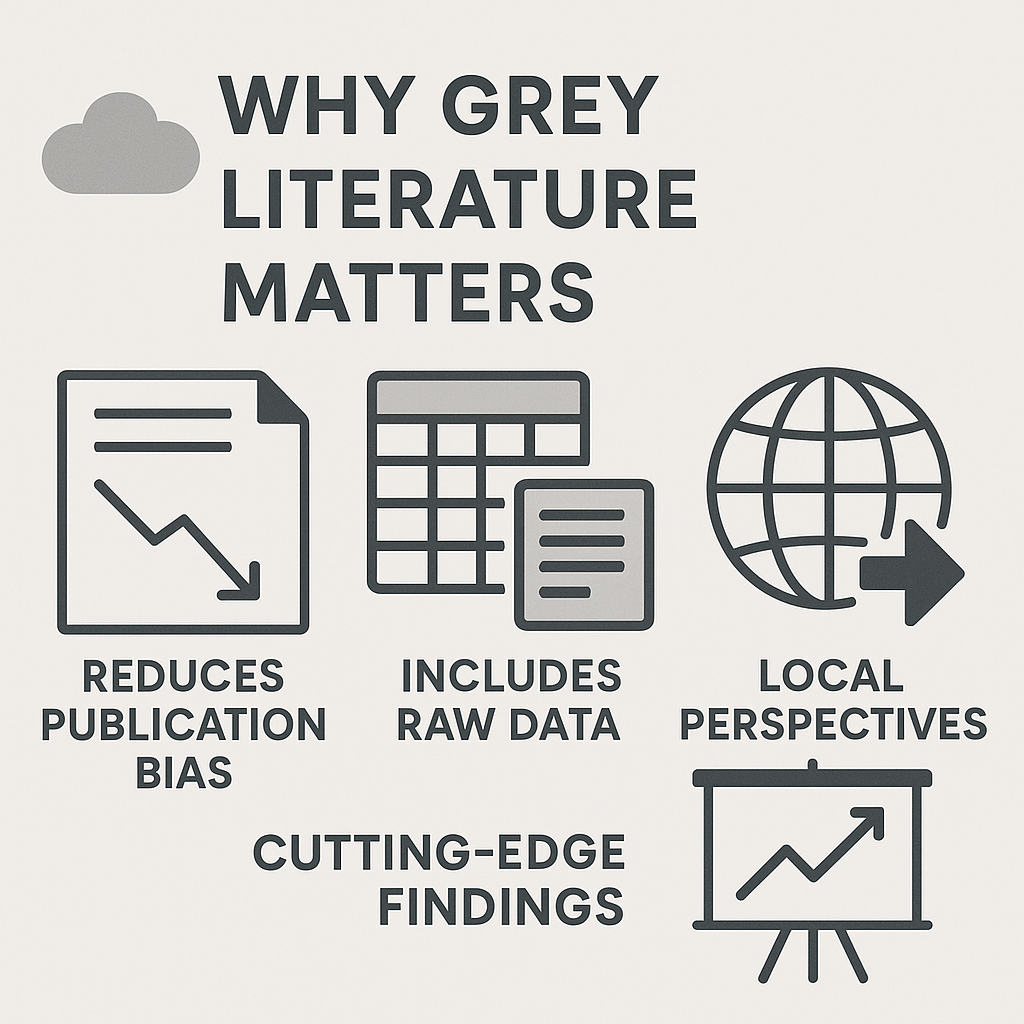
🌫️ Why Grey Literature Matters
Grey literature reduces publication bias by including studies with null or negative results that are often excluded from commercial journals. It provides raw data, local perspectives, and cutting-edge findings from conferences or ongoing trials. Including grey literature is essential to meet PRISMA and Cochrane standards for evidence comprehensiveness.
🔍 How to Find Grey Literature
Key Sources
- Academic works: ProQuest Dissertations, EThOS, DART-Europe
- Clinical trials: ClinicalTrials.gov, WHO ICTRP, EU Clinical Trials Register
- Conferences: Web of Science Conference Proceedings, Scopus
- Government/org reports:
- Global: WHO IRIS, World Bank Documents
- Regional: RAND Corporation, local health departments
- Specialized repositories:
- OpenGrey (European reports)
- NTIS (U.S. technical reports)
Search Tactics
- Google Advanced: Use
site:.govorsite:.edufilters and limit by filetype (filetype:pdf). - Expert outreach: Contact researchers directly for unpublished datasets.
- Snowballing: Mine reference lists of relevant grey documents.
🛠️ Implementation Strategies
- Document rigorously: Specify sources searched, dates covered, and search terms. Include grey literature in PRISMA flow diagrams.
- Quality assessment tools: Use the AACODS checklist (Authority, Accuracy, Coverage, Objectivity, Date, Significance) and DARE criteria for organizational reports.
- Balance challenges:
- Allocate 20-30% of search time to grey literature
- Use reference managers like Zotero with duplicate detection
📝 Example Search Framework
1. **Databases**: PubMed + Embase
2. **Registries**: ClinicalTrials.gov (last 5 years)
3. **Google**: `[topic] filetype:pdf site:*.org`
4. **Handsearch**: Top 3 relevant conferences' 2020-2023 proceedings
By systematically incorporating grey literature, reviewers can produce more authoritative, less biased syntheses that reflect the full evidence landscape.
References: See PubMed, UCLA Guide, and RUG Library for more.

About the Author
Connect on LinkedInGeorge Burchell
George Burchell is a specialist in systematic literature reviews and scientific evidence synthesis with significant expertise in integrating advanced AI technologies and automation tools into the research process. With over four years of consulting and practical experience, he has developed and led multiple projects focused on accelerating and refining the workflow for systematic reviews within medical and scientific research.